
Buying Guides
CR10e vs CR10: Which Controls and Engine Suit Your Work?
Compare mechanical and pilot controls, understand engine ratings and build a shortlist around your operator, access and attachments.
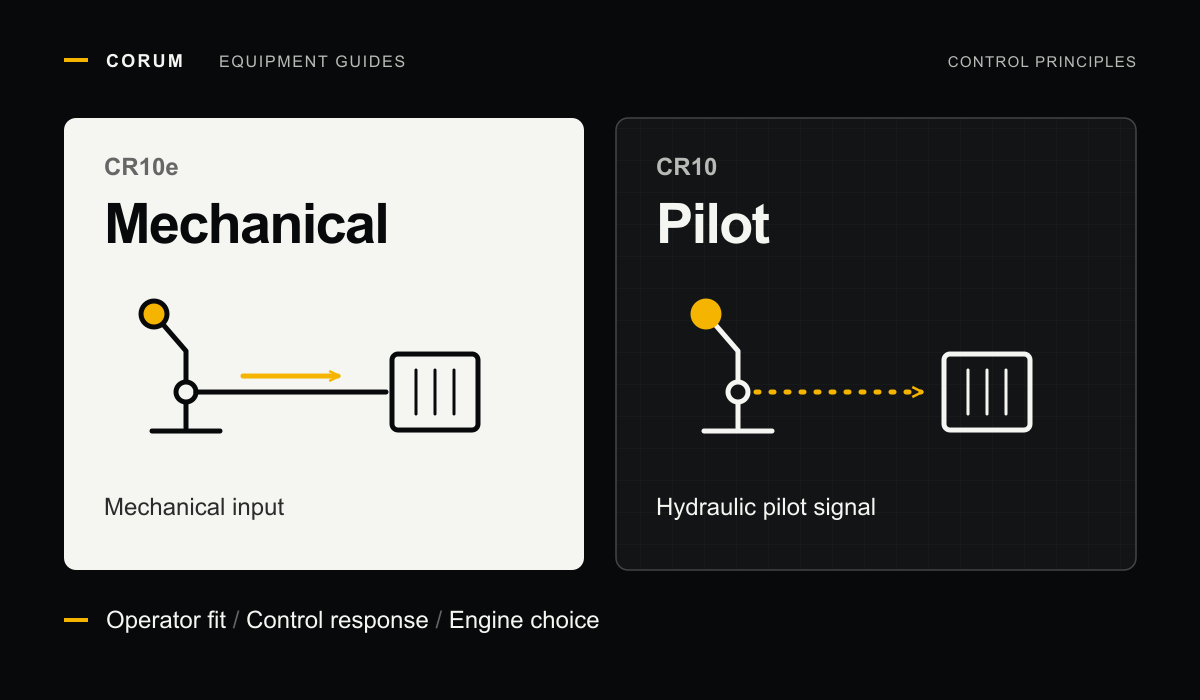
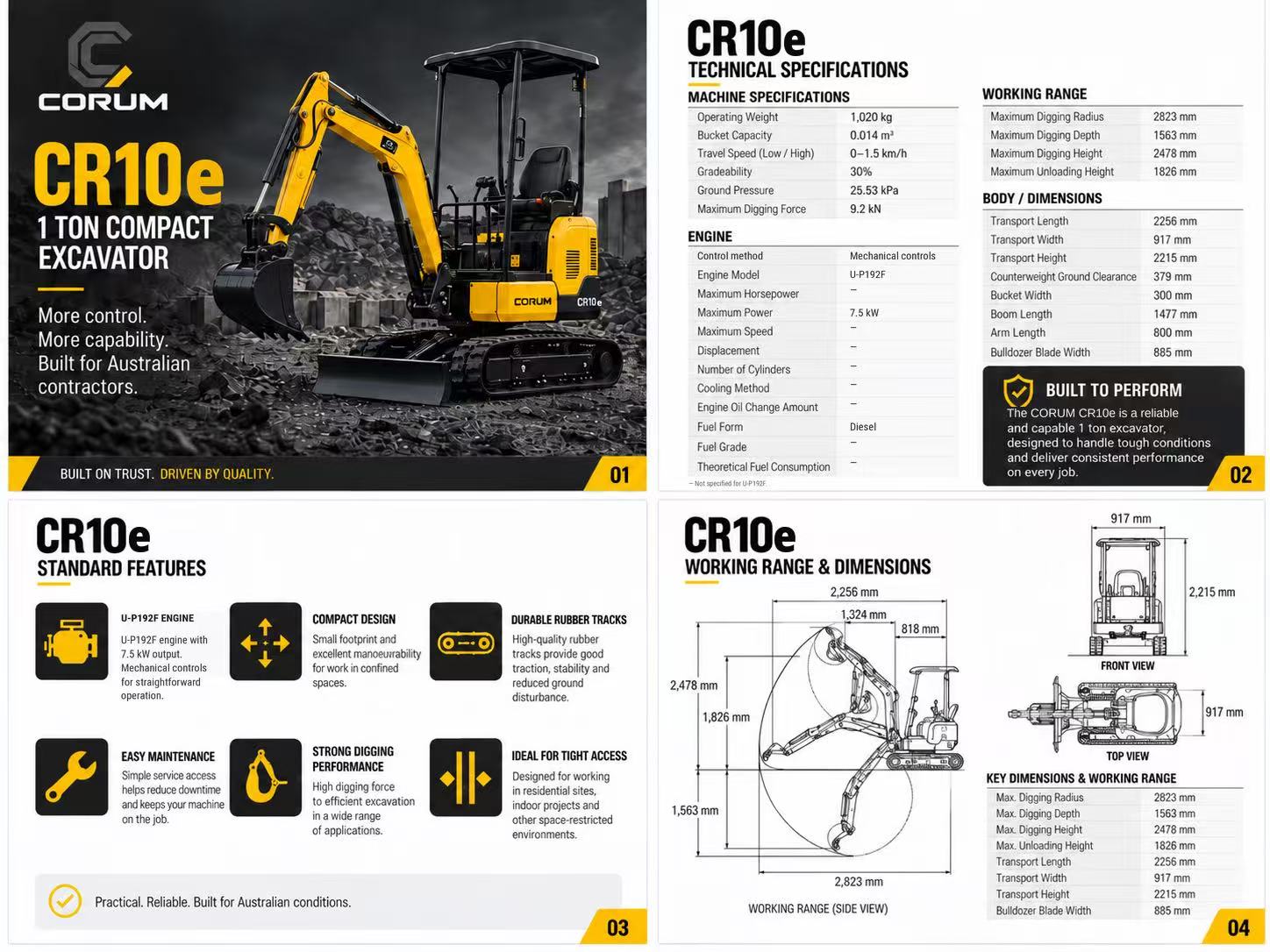
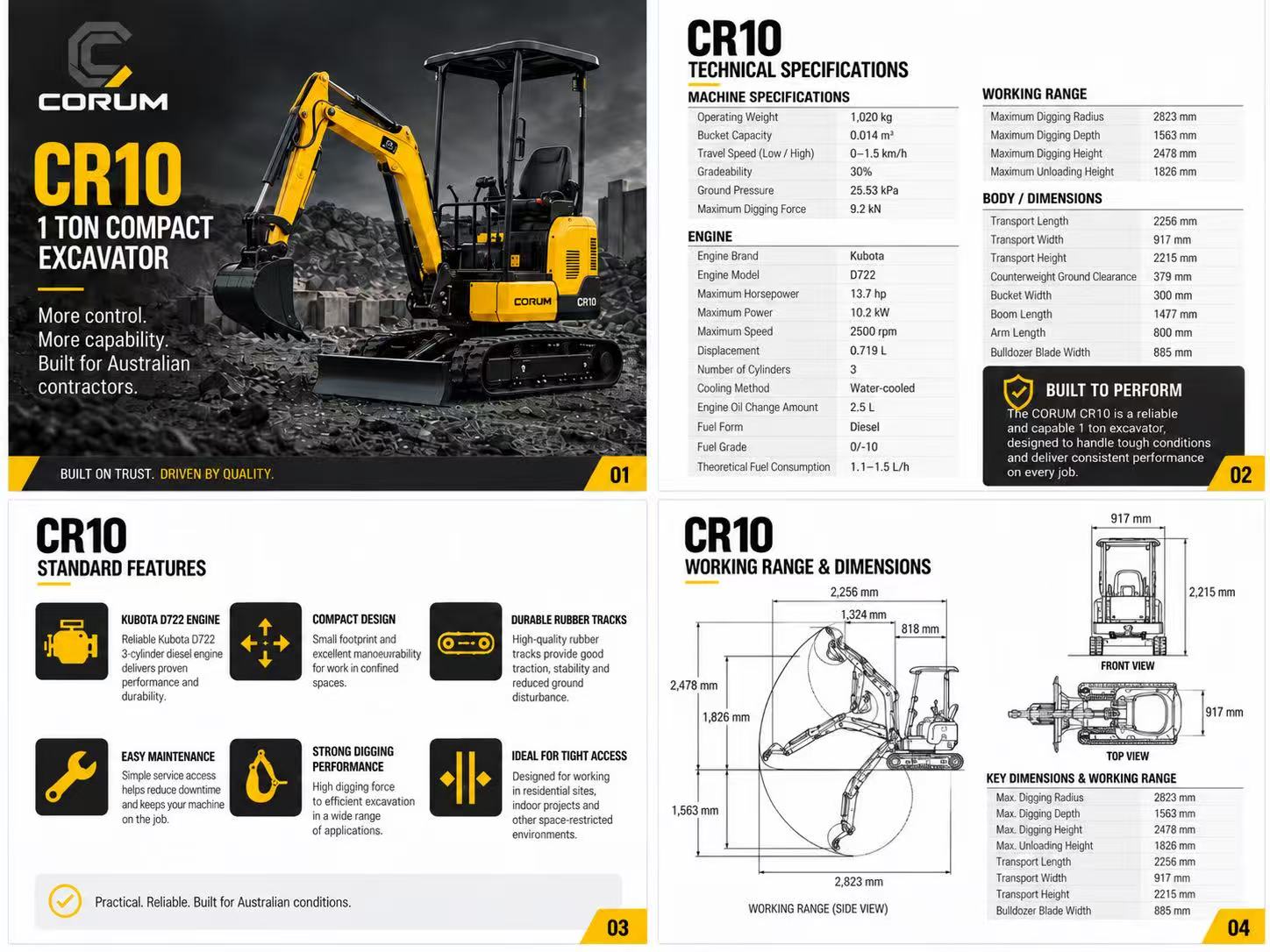
Choose between CR10e and CR10 by looking at the controls you prefer, the engine you want to maintain and the work the machine must perform. CR10e uses mechanical controls; CR10 uses pilot controls. Start with that difference, then compare the current engine, dimensions and performance specifications shown on this page.
A useful decision is specific: which machine suits your access, attachments, operator and routine? Neither a control label nor an engine name answers all of those questions on its own.
What changes with the controls?
Mechanical and pilot controls describe how an operator's input reaches the hydraulic control system. In a conventional mechanical arrangement, the lever operates the valve through a mechanical connection. Hydraulic pilot controls use a pressure signal from the operator's control to operate the main valve. HydraForce's explanation of manual and hydraulically piloted controls describes this general distinction.
For a buyer, the practical questions concern reach, movement, response and comfort. Check whether the operator can sit naturally, use the controls through their normal range and see the working area without continually changing posture. Consider the person who will use the machine most often, rather than judging the layout only from a product photograph.
Repeated grading or trenching makes consistent, comfortable control especially relevant. Someone already familiar with mechanical controls may have a different preference from someone accustomed to pilot joysticks. Familiarity is a useful starting point, but the exact machine layout still deserves attention.
Compare response, not labels alone
A pilot control system is not an automatic promise of faster work, and mechanical controls do not prevent careful work. Operator skill, machine setup, the hydraulic system, attachment and ground conditions all influence the result. Choose the control arrangement around the movements your work requires.
When assessing controls with a qualified operator, use comparable tasks in a suitable clear area. Observe how easily the operator starts and stops a movement, places the bucket and coordinates functions. Ask about the control pattern and safety lockout, and follow the machine's operating instructions. Do not assume the pattern is switchable because another excavator offers that feature.
For regular use, pay attention to the controls used repeatedly during your own work: digging, positioning, travelling and operating an attachment can place different demands on the operator. A brief look at a joystick is less useful than understanding that sequence.
Read the engine specification in context
Compare engine identity and the machine's rated power together. The engine manufacturer provides information about an engine family; the completed excavator specification describes the installed machine. These serve different purposes. For example, Kubota's published engine information identifies a particular engine variant and its rating basis. Use the CORUM model specification when comparing the excavators.
A power figure is not a direct measure of how much soil you will move in a day. Consider the bucket, digging requirement, material, hydraulic demands and the distance material must travel. Avoid converting a difference in rated power into an assumed percentage gain in productivity or fuel economy.
For ownership, ask for the service schedule and parts information that match the installed engine. Keep the engine model and serial identification with the machine's records. The practical questions are which routine tasks you will perform, who will handle servicing, and which filters and fluids the applicable documentation specifies.
Use your job to narrow the choice
- Access comes first. Measure the complete route and working area before deciding which control layout you prefer.
- Describe the work. Separate occasional garden excavation from recurring trenching, grading or attachment work.
- Identify the operator. Record their experience, preferred layout and likely time at the controls.
- Name the attachment. Check its mounting and hydraulic requirements against the machine, rather than relying on engine power alone.
- Plan maintenance. Compare the applicable service information with how you intend to look after the excavator.
If pilot controls are an important part of your preferred working setup, place CR10 on your shortlist. If you prefer mechanical controls, assess CR10e against the same job requirements. In both cases, use the model comparison to check the whole machine before making the decision.
For a tight residential route, the side-gate access guide provides a measurement checklist. If you are still deciding the required machine size, the Compact Excavator Size Guide covers reach, working space and transport.
Discuss CR10e and CR10 with CORUM Equipment. Tell us the work, the attachment and who will operate the machine so we can work through the relevant differences with you.
Machines in this guide
Sources & further reading
- HydraForce — Servo-mechanical Electrohydraulic Control for Compact Loaders, October 2021. Used for the general distinction between manual and hydraulic pilot controls; checked 30 September 2026.
- Kubota Engine America — D722-E4B. Engine-family background and rating context; checked 30 September 2026.
- CORUM model specifications: CR10e and CR10.
Sources checked